
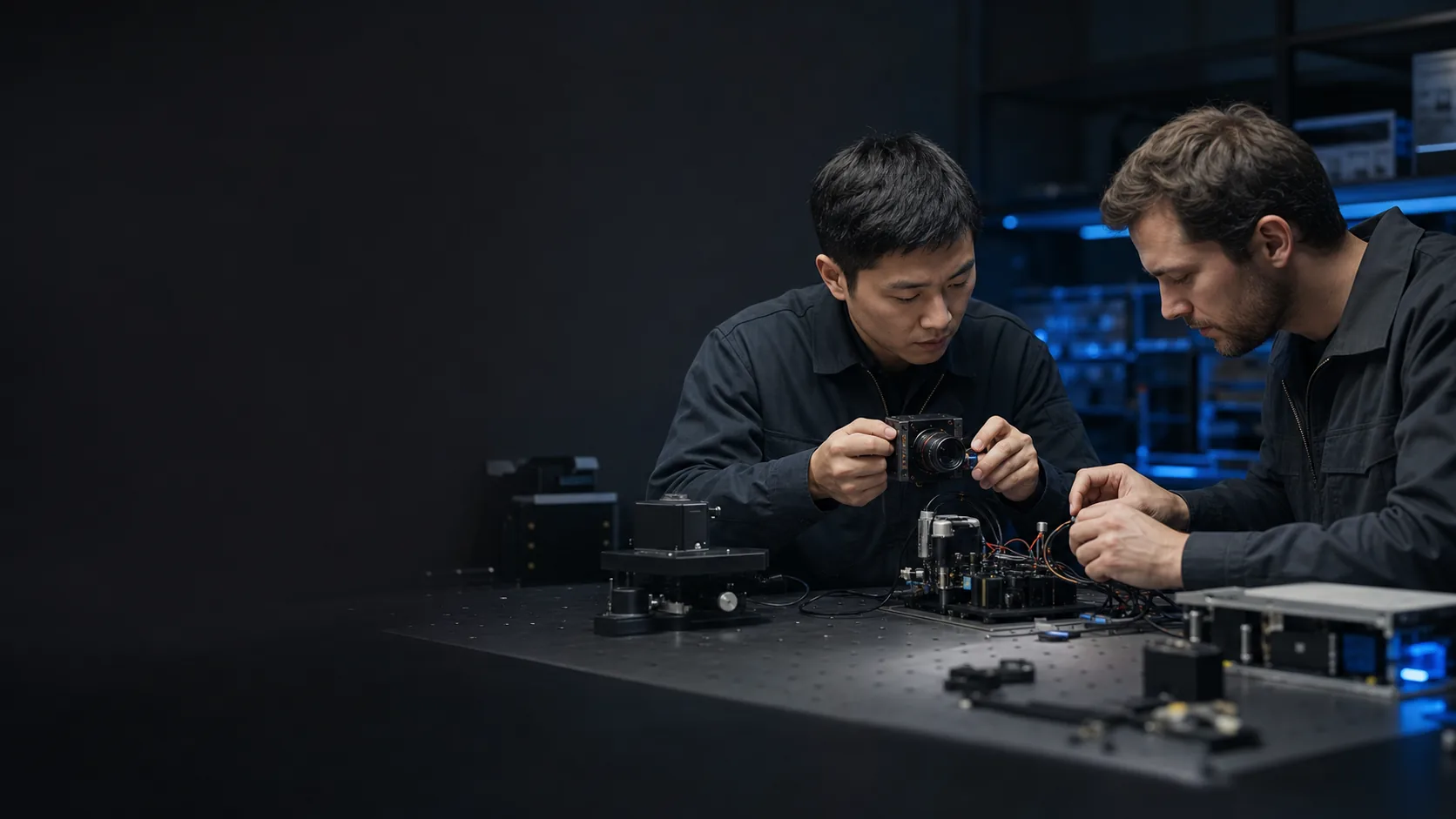
Evaluate the SoC, optical and model tradeoffs
COMPUTE FOUNDATION

02 · ENGINEERING PROCESS
SoC, optics and AI model choices interact. Our co-development stage is where product intent becomes a viable camera architecture and an edge deployment plan.

SYSTEM FOCUS
COMPUTE FOUNDATION
IMAGE INPUT
TASK BEHAVIOR
Co-development practice
Optical, compute, mechanical and model choices are most efficient when they are evaluated as a shared system rather than in sequence.
See how a sensor, SoC or model decision changes bandwidth, power, enclosure and user value before committing.
Give product, software, hardware and data contributors one set of measurable system constraints.
Turn a promising concept into interfaces, targets and prototypes that can actually be constructed and evaluated.
PROJECT OUTPUTS
The output gives each contributing team a stable source of truth for the next build.
A readable record of the options considered and what the product gains or gives up with each.
Connection points across optics, camera, SoC, power, host software and data workflows.
Measurable conditions the next build has to demonstrate for the program to move forward.
PROJECT PATH
Align the teams
Expose tradeoffs
Build the shared prototype
Decide with evidence
ENGINEERING QUESTIONS
Yes. Co-development is designed to connect with the people already accountable for product, firmware, model or manufacturing work.
We turn the disagreement into a system tradeoff and propose the smallest useful test that can produce evidence.
No. It can also clarify an existing design when teams need to re-evaluate performance, integration or the path to scale.
ORIVERX / ENGINEERING / 02